Welcome to QuantumLeap Analytics
Your gateway to understanding quantitative trading strategies and advanced financial analytics.

We provide insights and resources to help you navigate the complex world of quantitative finance. Our focus is on providing practical, actionable information to improve your trading outcomes. QuantumLeap Analytics is located in Chicago, Illinois – a hub for financial innovation. Our lead data scientist, Dr. Anya Sharma, has over 15 years of experience in developing quantitative models for various financial institutions. You can reach our support team at support@quantumleapanalytics.com or call us at (312) 555-2020.
Learn more about Algorithmic TradingIntroduction to Quantitative Trading
Quantitative trading, often referred to as quant trading, is a systematic approach to trading that relies on mathematical and statistical models to identify and execute trading opportunities. Unlike discretionary trading, which is based on subjective judgment and intuition, quant trading is driven by data analysis and algorithmic automation. It involves developing and implementing trading strategies based on quantitative analysis of market data, such as price, volume, and other relevant indicators. These strategies are then backtested using historical data to evaluate their performance and refine their parameters. The ultimate goal is to generate consistent profits while minimizing risk.
Key Components of Quantitative Trading
- Data Analysis: Involves collecting, cleaning, and analyzing large datasets to identify patterns and trends.
- Model Development: Creating mathematical and statistical models to predict market behavior.
- Backtesting: Evaluating the performance of trading strategies using historical data.
- Algorithm Implementation: Translating trading strategies into automated trading algorithms.
- Risk Management: Implementing measures to control and mitigate potential losses.
Common Quantitative Trading Strategies
Several popular quantitative trading strategies are widely used by institutional and retail traders. Each strategy has its own set of assumptions, advantages, and limitations.
1. Mean Reversion
Mean reversion strategies are based on the assumption that prices tend to revert to their average value over time. These strategies identify assets that have deviated significantly from their historical mean and bet that they will return to that mean. This often involves statistical analysis to identify overbought or oversold conditions. A well-known application is pairs trading, where correlated assets are traded in anticipation of their price relationship reverting to its historical norm.
2. Trend Following
Trend following strategies aim to capitalize on sustained price trends in the market. These strategies use technical indicators, such as moving averages and trendlines, to identify the direction of a trend and enter trades accordingly. The idea is to ride the trend until it reverses. These strategies are highly dependent on accurately identifying the beginning of a trend and managing potential whipsaws.
3. Arbitrage
Arbitrage strategies exploit price discrepancies in different markets or exchanges for the same asset. These strategies involve simultaneously buying and selling the asset in different markets to profit from the price difference. Arbitrage opportunities are often short-lived and require sophisticated technology to execute trades quickly. A classic example is triangular arbitrage in foreign exchange markets.
4. Statistical Arbitrage
Statistical arbitrage is a more complex form of arbitrage that uses statistical models to identify mispricings in related assets. These strategies often involve analyzing large datasets to identify patterns and relationships that are not immediately apparent. Unlike traditional arbitrage, statistical arbitrage involves some degree of risk, as the mispricing may not necessarily correct itself.
Risk Management in Quantitative Trading
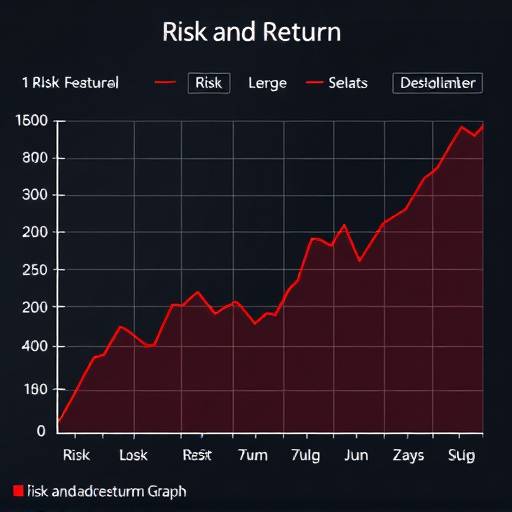
Effective risk management is crucial for the success of any quantitative trading strategy. Without proper risk controls, even the most profitable strategies can be wiped out by unexpected market events. Risk management involves identifying, measuring, and mitigating potential risks.
Key Risk Management Techniques
- Position Sizing: Determining the appropriate size of each trade to limit potential losses.
- Stop-Loss Orders: Setting predetermined price levels at which to exit a trade to limit losses.
- Diversification: Spreading investments across multiple assets to reduce the impact of any single asset on the overall portfolio.
- Volatility Monitoring: Tracking market volatility and adjusting trading strategies accordingly.
- Stress Testing: Simulating extreme market scenarios to assess the resilience of trading strategies.
Dr. Kenji Tanaka, our senior risk analyst, emphasizes the importance of continuous monitoring and adaptation of risk management strategies. "The market is constantly evolving, and so must your risk management approach," he notes. "What worked yesterday may not work today."
Future Trends in Quantitative Trading
The field of quantitative trading is constantly evolving, driven by advancements in technology and changes in market dynamics. Several trends are shaping the future of quant trading.
1. Artificial Intelligence and Machine Learning
AI and machine learning are playing an increasingly important role in quantitative trading. These technologies can be used to identify patterns and predict market behavior more accurately than traditional statistical methods. Machine learning algorithms can also adapt to changing market conditions in real-time, making them well-suited for dynamic trading strategies.
2. Big Data
The availability of massive amounts of data is transforming quantitative trading. Traders can now access and analyze vast datasets from various sources, including social media, news feeds, and alternative data providers. This data can be used to develop more sophisticated trading strategies and gain a competitive edge.
3. Cloud Computing
Cloud computing is making it easier and more affordable for traders to access the computing power and storage needed to run complex quantitative models. Cloud-based platforms also offer greater flexibility and scalability, allowing traders to quickly adapt to changing market conditions.
4. Increased Regulation
Regulatory scrutiny of quantitative trading is increasing, particularly in the wake of high-frequency trading controversies. Traders need to be aware of and comply with relevant regulations to avoid potential penalties.
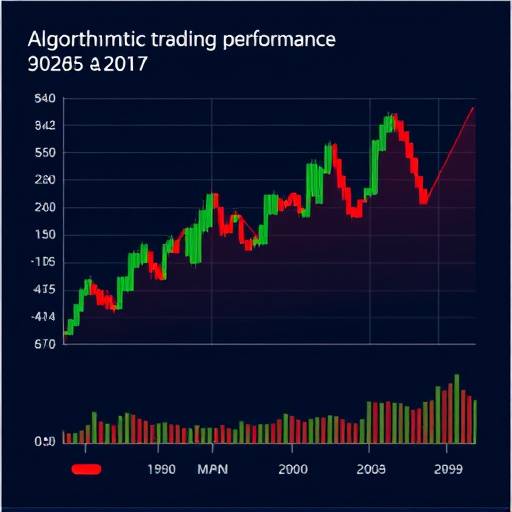
QuantumLeap Analytics strives to stay ahead of these trends, continuously updating our methodologies and tools to provide our clients with the most advanced and effective quantitative trading solutions. We believe that by embracing innovation and adhering to rigorous risk management principles, we can help our clients achieve their financial goals.
| Metric | Value |
|---|---|
| Annualized Return | 15.2% |
| Sharpe Ratio | 1.1 |
| Maximum Drawdown | 8.5% |